
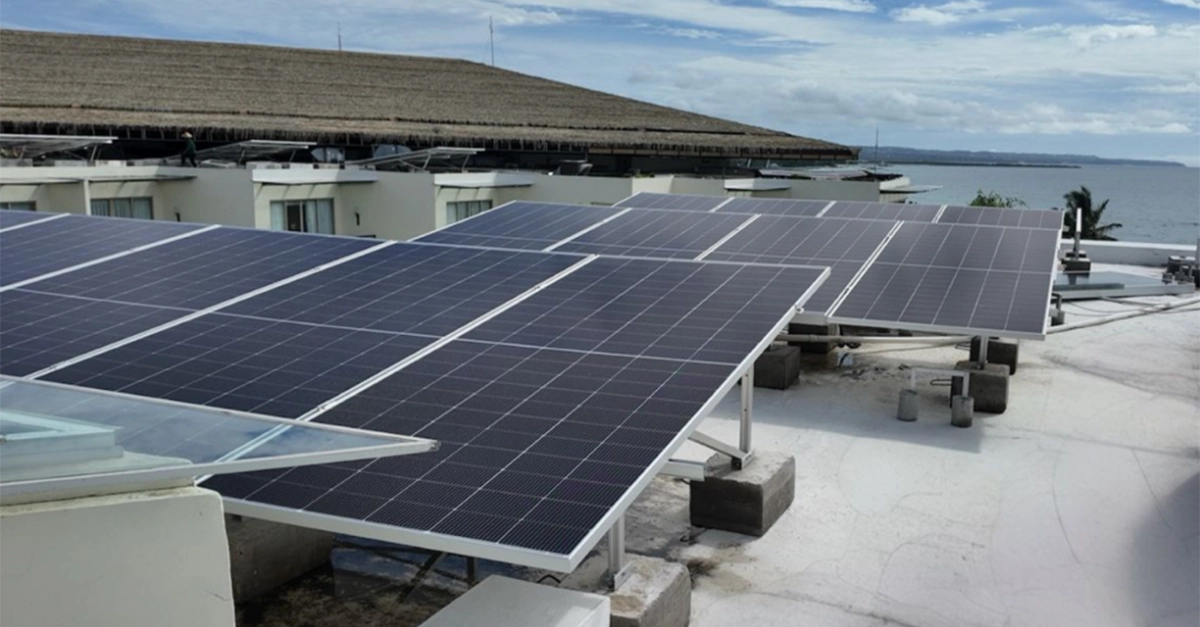

As volatility and uncertainty continue to shape global energy markets, Bali’s hospitality sector is increasingly viewing energy strategy as an important part of long-term business resilience. A growing number of premium hotels in Bali are accelerating the adoption of rooftop solar power, not only to meet sustainability targets but increasingly to mitigate risks tied to supply volatility and rising energy costs.
One example of this transition is a recently completed rooftop solar installation at a premium international resort in Bali, developed in collaboration with Greenvolt Power Indonesia. The system carries an installed capacity of approximately 323 kilowatt-peak (kWp), and stands as a meaningful contribution to the growing adoption of solar technology within Bali’s hospitality sector.
“What we’re seeing is a structural shift in how the hospitality sector thinks about energy,” said Greenvolt Power Indonesia Head of Business Development, Bobby Benly. “It’s no longer just about cutting costs, it’s about resilience, meeting global compliance standards, and keeping pace with travelers who increasingly factor sustainability into their choices.”
By utilizing rooftop solar, premium hotel operators diversify their energy mix with renewable sources and reduce reliance on fossil-fuel-based electricity. This helps to buffer the indirect effects of current geopolitical disruption on electricity prices and supply stability.
This shift reflects a broader recalibration within the tourism industry, where external factors, from global conflict to fuel price fluctuations, are no longer seen as distant risks, but as immediate operational concerns.
For Bali, the stakes are particularly high. Bali remains dependent on interconnected power supply systems from outside the island, while demand continues to grow at an estimated 14–16 percent annually, according to Bali provincial government estimates.
Despite the vulnerabilities, Bali’s solar potential offers a credible path forward, though it remains largely untapped. According to the Institute for Essential Services Reform (IESR), Bali’s rooftop solar potential is estimated between 3.3 to 10.9 gigawatts, yet current utilization stands at less than one percent as of 2025.
Policy direction is also reinforcing this transition. The province has implemented regulations encouraging rooftop solar adoption across government, hospitality, and commercial sectors since 2019. Bali Governor Wayan Koster, in an official statement published on the Bali Provincial Government’s website in May 2025, has described energy self-sufficiency as a strategic necessity for Bali.
“Energy independence for Bali is no longer optional. This is about the sovereignty and future of our island, which, in fact, does not have natural resources like coal or other fossil fuels. One practical solution that can be implemented immediately is the large-scale adoption of rooftop solar power systems (PLTS),” said Governor Koster.
Beyond energy resilience, market expectations continue to reinforce the shift. Hotels in Indonesia are facing demands from multiple fronts: global parent companies, investors, regulators, and travelers.
On the traveler side, Booking.com ‘s 2025 Sustainable Travel Research found that 93 percent of respondents now actively consider sustainable options when making travel decisions. The survey covered 32,000 travelers across 34 countries, including Indonesia.
Taken together, these dynamics indicate that the adoption of renewable energy in Bali’s hospitality sector is being driven by risk management and market pressure. As geopolitical uncertainty persists and sustainability expectations continue to rise, energy strategy is rapidly moving from a back-end operational issue to a front-line determinant of competitiveness.
As adoption gradually expands, the transition toward clean energy in Bali’s hospitality sector is unlikely to be driven by individual projects alone. Within this context, achieving meaningful energy resilience will require coordinated action across hotel operators, investors, and policymakers.

