

Whether the US-Iran War ends soon or it drags on, one thing is certain: the days of being able to rely on a steady supply of cheap energy are irrevocably over. Current geopolitical dynamics serve as a stark wake-up call for industry players, exposing just how fragile business can be when critical energy lifelines remain dependent on forces beyond their control.
These global shocks prove that unexpected disruptions are now the reality and industry players need to factor in their energy needs if they are to build resilience as new economic and geopolitical forces come into play.
This is even more important in Indonesia, where we are navigating a unique set of domestic challenges–while also unlocking opportunities to reduce reliance on subsidies and reinforce long-term sustainability commitment.
Amid significant energy capacity shortfalls across the country, business continuity is at stake. Since 2024, the Java-Madura-Bali region has recorded a power reserve margin below 30%. This sits under the mandated minimum of 35%.
The situation is even more fragile outside of this central grid. Sumatra, Kalimantan, and Sulawesi recorded reserve margins of just 19%, 21%, and 26% respectively. These figures fall drastically short of the 40% minimum required for regions outside Java-Madura-Bali. For businesses, this highlights a growing risk of energy supply shortfalls–one that could hinder Indonesia’s ambition to accelerate industrialization and strengthen its manufacturing base.
The Industrial Estate Association (HKI) has also raised concerns over these shortages. They highlight that current electricity and gas supplies are not fully aligned with the needs of our growing industrial sector. Several industrial estates also face logistical barriers that drive up production costs and hamper distribution efficiency.
Despite these glaring vulnerabilities, many industrial players still treat energy merely as a cost center. Furthermore, the energy transition is often framed simply as an ESG obligation. It has not yet been fully recognized for what it truly is: a strategic approach to strengthen business resilience amid disruptions and uncertainties.
It is time to change this mindset. Industry players must reposition the “renewable energy transition” as a strategic roadmap. We need to shift away from short-term cost considerations and mandatory ESG checklists. More importantly, it calls for taking responsibility in building a sustainable future for Indonesia, rather than simply capitalizing on its abundant resources, and strengthening true energy resilience against unforeseen disruptions.
Accelerating this transition is not just about meeting obligations or achieving cost efficiency. It is a strategic investment in long-term business continuity. Renewable energy provides a level of supply certainty that enables businesses to remain resilient and keep growing in an increasingly uncertain environment.
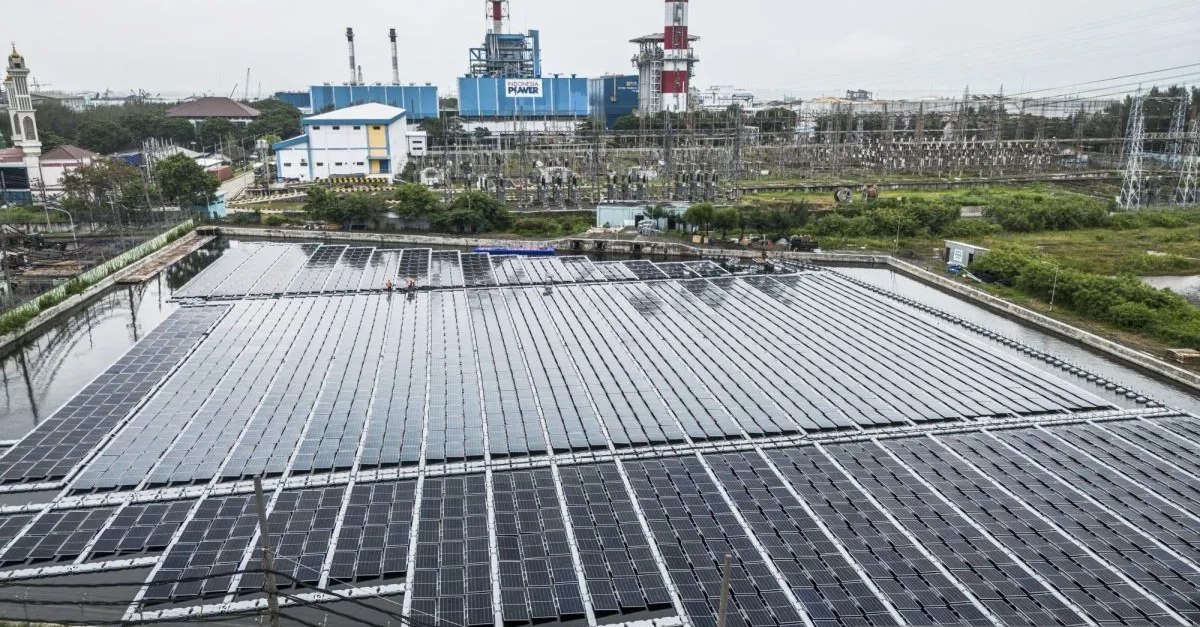
Solar energy as a low-hanging fruit in Indonesia, presents a massive, immediate opportunity for Indonesian business players. According to Ministry of Energy data, Indonesia has the chance to unlock an estimated 3.294GW of national solar energy potential. Yet, as of 2025, a mere 1.49GW of solar energy has actually been installed..
Why the gap? Industry players frequently highlight high upfront costs as one of the main challenges to adopting solar energy.
Fortunately, many of these perceived barriers, such as financial constraints, no longer apply. Private companies with strong financial backing can now play a major role in helping industries achieve energy resilience. By utilizing business models like zero-CapEx and zero-OpEx, these companies facilitate renewable energy adoption. This allows businesses to transition their energy sources while keeping their capital focused squarely on growth.
In the end, financing alone is not enough. Execution and operation capability is just as critical as financing in delivering results. With access to proven renewable energy solutions, businesses can turn their ambitions into execution.
The transition is already preparing forward-thinking businesses with the energy certainty they need. However, successfully meeting this potential requires collaboration, which calls for a shift in mindset from individual, short-term gains to a more collective, long-term vision. Businesses must work with trusted, experienced solar energy partners. Together, they can deliver long-term solar solutions that are tailored to the specific needs of the business.
Ultimately, treating the renewable energy transition as a shared agenda rather than an individual pursuit will be key to strengthening Indonesia’s future economic vitality. Collective action among businesses and stakeholders will accelerate the transition and ensure a more reliable and resilient energy supply for decades to come.
This opinion article was authored by Bobby Benly, Head of Business Development, Greenvolt Power Indonesia, and originally published by Antara News.

