
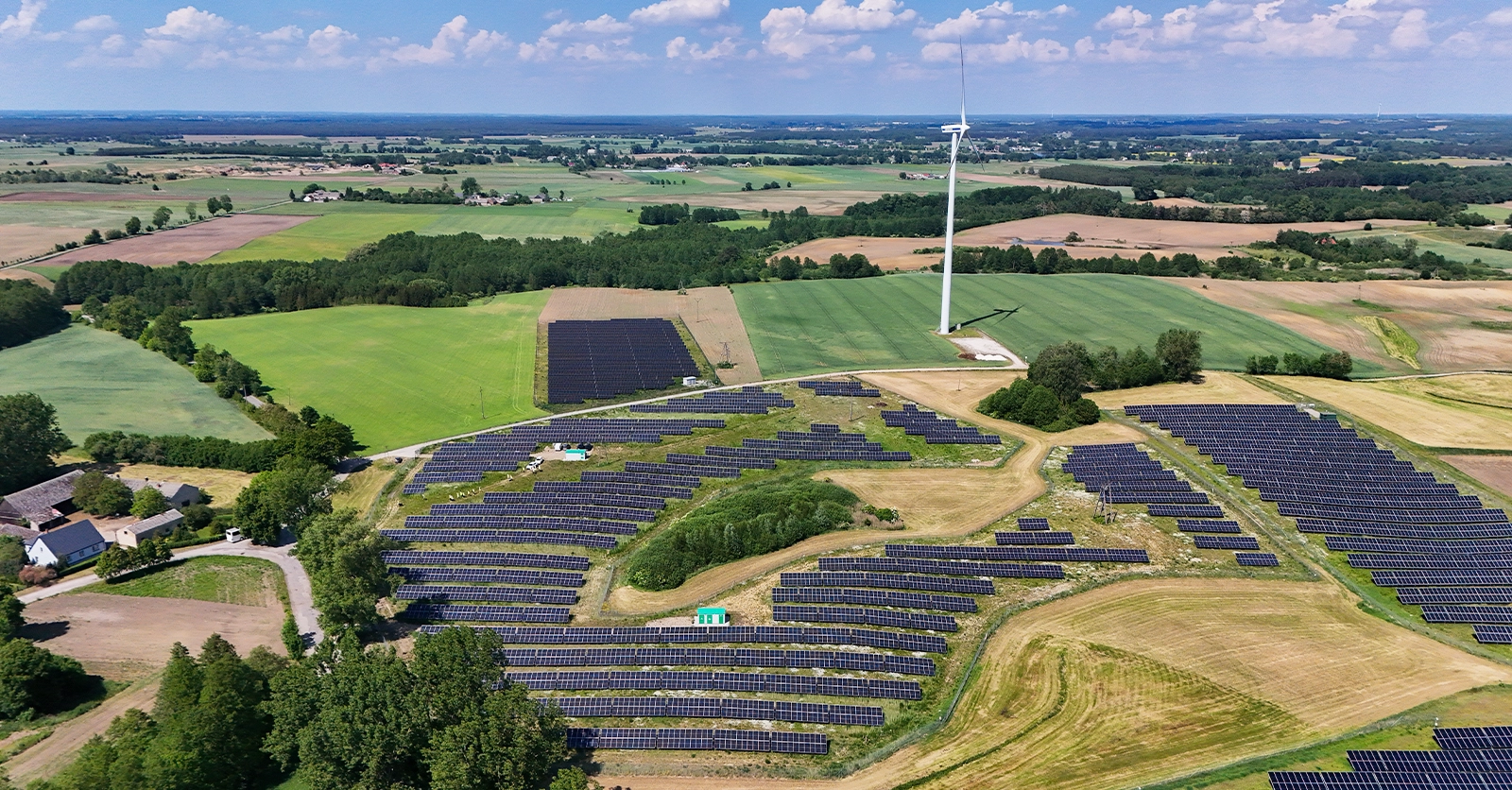

In the face of the global energy transition and the urgent need for decarbonisation, hybrid projects are becoming a breakthrough solution. By combining solar farms, wind farms and energy storage systems into a single, integrated infrastructure, they offer a real alternative to conventional energy sources – flexible, efficient and sustainable.
What are hybrid projects and how do they work?
Hybrid projects are integrated renewable energy installations that combine solar farms and wind farms with energy storage systems. Their purpose is to ensure a stable energy supply regardless of weather variability.
In practice:
• solar power is generated during the day and more intensively in summer,
• wind power typically increases at night and is stronger in winter,
• energy storage systems capture excess energy and release it during peak demand, while also balancing grid intake.
This enables smoother power delivery and increases flexibility in energy trading.
Hybrid projects as a response to energy system challenges
Greater system stability
Combining large-scale solar and wind farms reduces generation volatility. Energy storage helps bridge the gap between production and consumption.
Improved cost-efficiency
Hybrid projects benefit from shared grid infrastructure, unified control systems and reduced operational costs.
Better energy trading opportunities
With energy storage in place, operators can sell electricity when market prices are highest. This improves return on investment and enables participation in capacity and balancing markets.
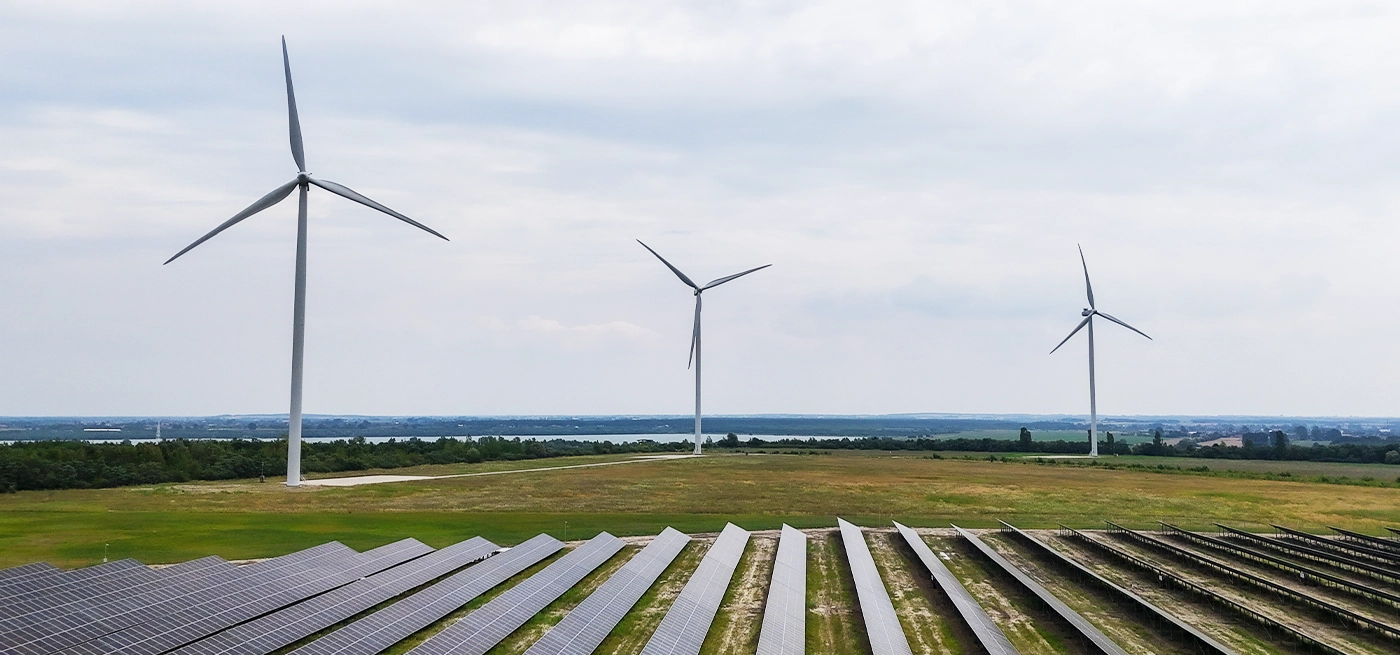
Sompolno,
the first licensed hybrid project in Poland
In 2025, Greenvolt Power finalised the sale of its hybrid project in Sompolno to Energa Wytwarzanie, after reaching the commercial operation date (COD). It became the first officially licensed hybrid project in Poland.
Developed in accordance with Polish regulations, the project operates as a fully integrated hybrid system with a single grid connection and a unified energy management system.
26MW
Wind farm

10MW
Solar farm

3MW
BESS
(battery storage)

111GWh
Annual energy output
(approx.)
Energy storage in hybrid projects – purpose and advantages
Energy storage is key to ensuring flexibility and stability in hybrid operations. The use of BESS (Battery Energy Storage Systems) allows operators to:

In the case of Sompolno, the 3 MW BESS installation enables the hybrid project to operate as a fully functional energy hub.
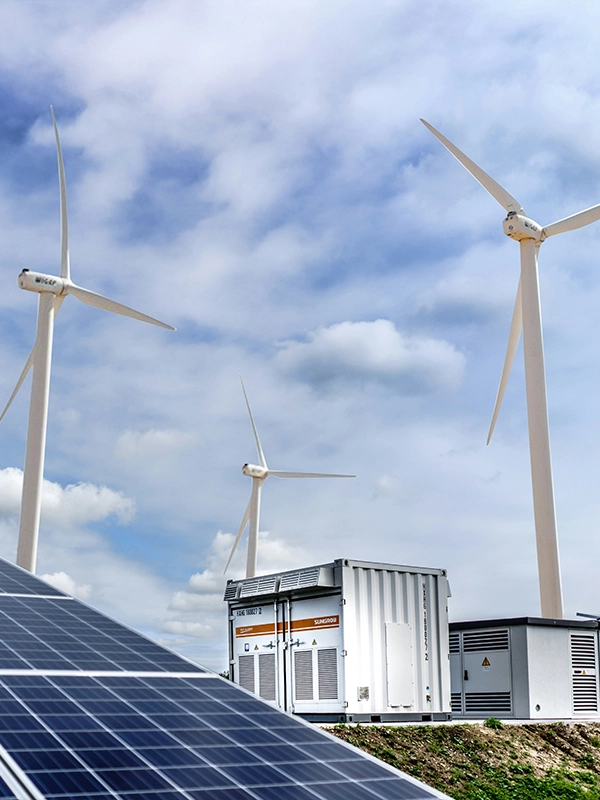
Hybrid projects in practice:
more than just separate technologies
Hybridisation of renewables is no longer an experimental approach but a proven investment model already reshaping the energy landscape.
By integrating solar farms, wind farms and energy storage, hybrid projects deliver:
Greenvolt shows that hybrid projects are real, operational solutions leading the transformation of modern energy systems.

